
Chair Tai Chi: A Gentle Way to Start Moving
All the calm of tai chi, none of the worry about balance. Here is how to begin from a sturdy chair.
Prefer to watch? Here is the video version (large print, no sound needed). Watch on YouTube
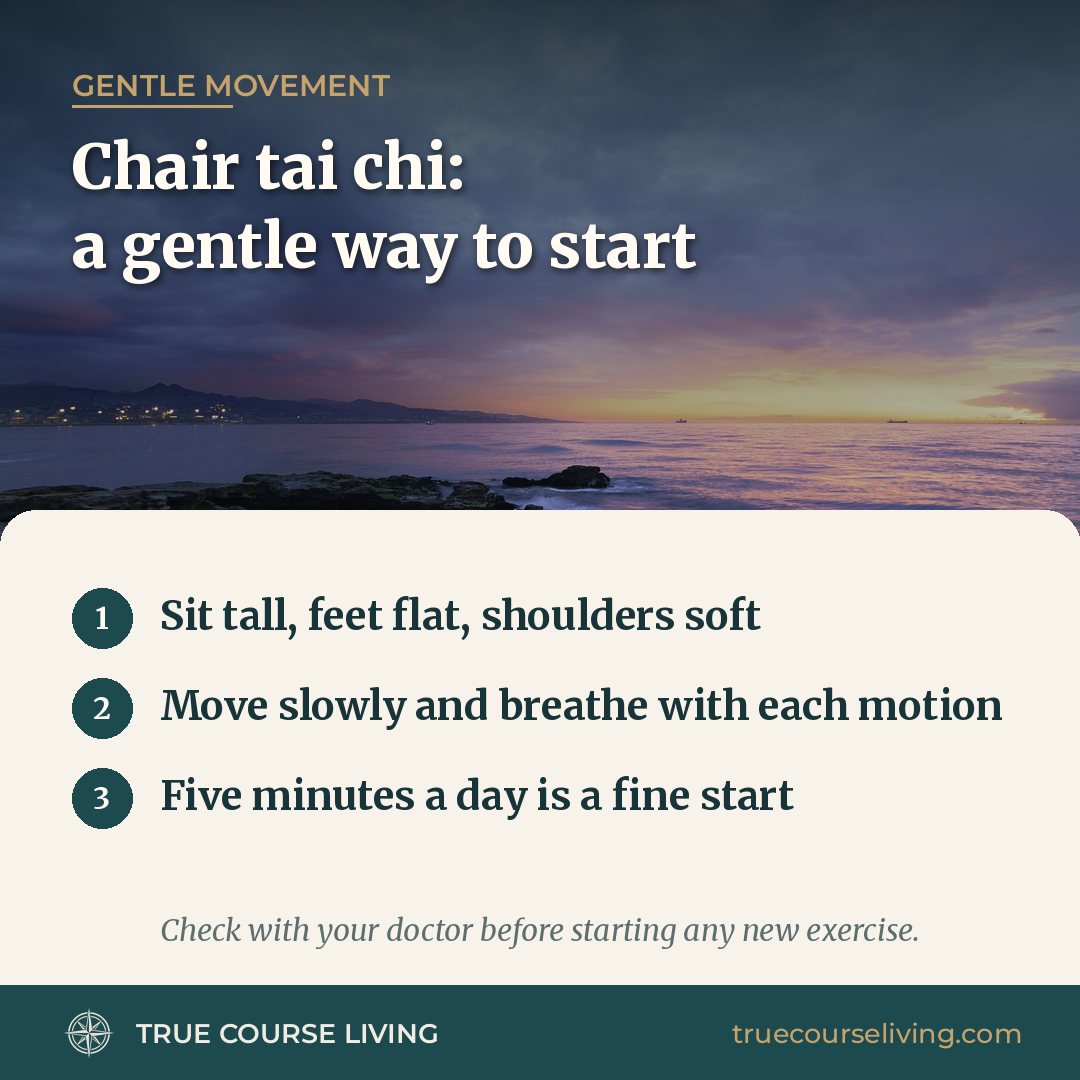
Have you ever watched a group doing tai chi in the park, moving like slow water, and thought, "That looks wonderful, but my knees would file a complaint"? I had the same thought. Then I learned you can do it sitting down.
Chair tai chi uses the same slow, flowing movements as standing tai chi. The chair takes care of your balance, so you can focus on breathing, posture and moving smoothly. It’s a gentle way to wake up stiff joints, and many people find it calming too.
Getting set up
- Use a sturdy chair without wheels, set on a flat floor. A kitchen chair works well.
- Sit toward the front half of the seat, feet flat and about hip-width apart.
- Sit tall, as if a string were lifting the top of your head. Let your shoulders soften.
- Wear comfortable clothes. Bare feet or flat shoes are both fine.
Three movements to begin
Floating arms. Rest your hands on your thighs. Breathe in slowly and let your arms float up in front of you to shoulder height, palms down. Breathe out and let them drift back down. Repeat 5 times.
Holding the ball. Imagine holding a beach ball against your belly, one hand on top and one underneath. Slowly turn your upper body a little to the right, then back to center, then to the left. Keep it small and smooth. 3 times each way.
Pushing the waves. Bring your hands up to chest height, palms facing out. Breathe out and gently push forward, as if smoothing a wave away from you. Breathe in and draw your hands back. Repeat 5 times.
Try this today
- Set a timer for five minutes tomorrow morning.
- Do the three movements slowly, in order, and repeat until the timer rings.
- Notice how your shoulders and back feel afterward.
Keep it gentle
Tai chi isn’t about effort. Move at about half the speed you think you should, keep every motion in a comfortable range, and never push through pain. Five minutes a day done regularly is worth more than a long session once a month.
Please check with your doctor before starting any new exercise, especially if you’ve had joint surgery, feel dizzy, or have a heart or lung condition. Stop if anything hurts.
Want more?
I wrote a large-print book, Chair Tai Chi, that walks through 31 seated movements and a 28-day, 10-minutes-a-day program, with a picture for every step. You can see it on Amazon. The free Chair Tai Chi printables are a good place to start too.
Have you ever tried tai chi, sitting or standing? I’d love to hear how it went.