
Three Everyday Habits for a Clearer Head
Everyday memory slips are common. Here are simple habits that help.
Prefer to watch? Here is the video version (large print, no sound needed). Watch on YouTube
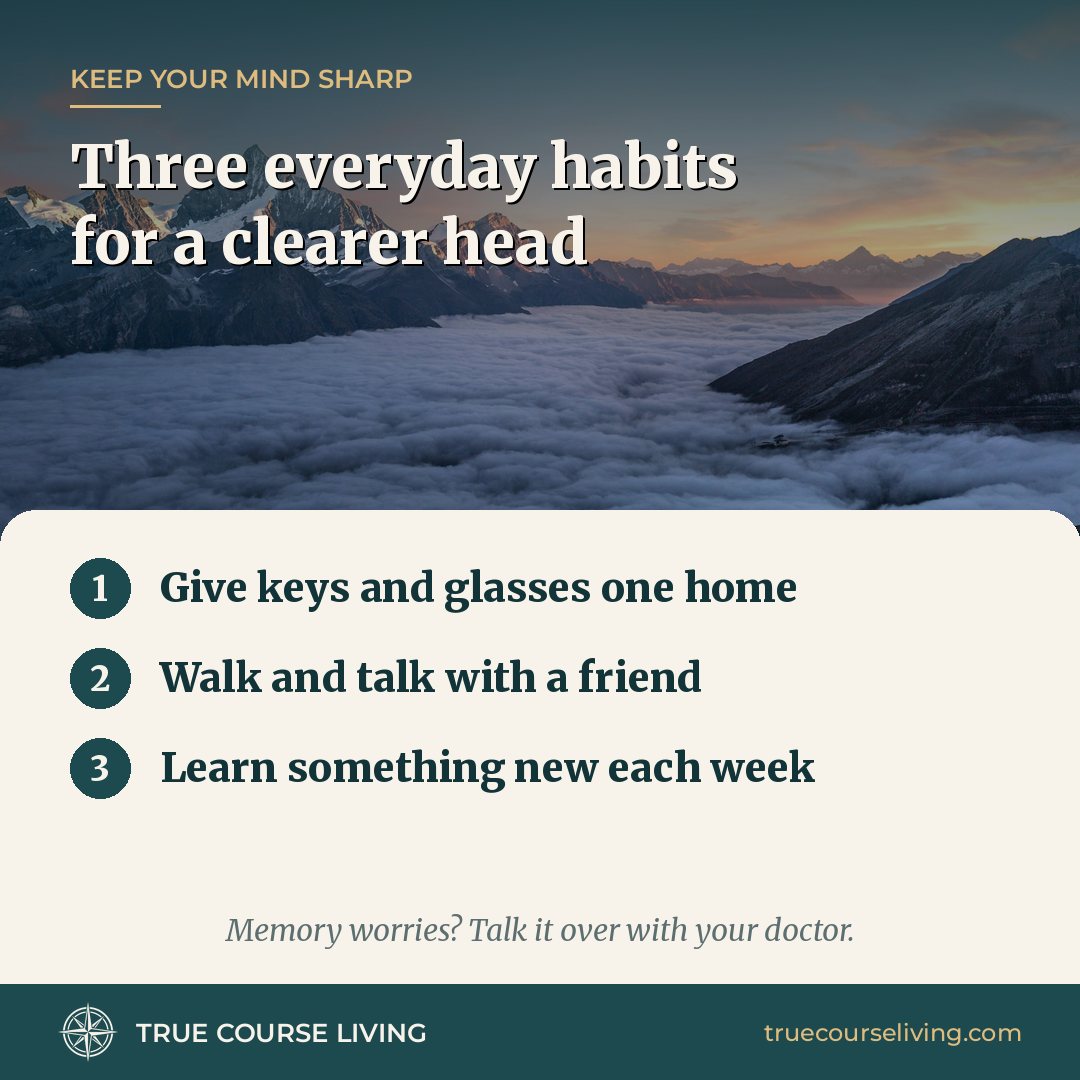
Misplaced your keys again? Walked into a room and forgotten why you came? Most of us have, and most of us have wondered for a second whether it means something.
Everyday slips like these are common at every age. Busy days, poor sleep and stress make them more likely. The good news is that a few simple habits can help keep your mind sharp.
1. Give things a home
A lot of "memory" trouble is really a filing problem. If your keys can be in any of six places, you have to search six places.
- Pick one spot for keys, glasses, wallet and phone. A bowl by the door works well.
- Put things back in that spot every single time, even when you’re in a hurry.
- Keep a notepad or whiteboard in the kitchen for appointments and to-dos.
Your brain will thank you for not having to remember what a bowl can remember for you.
2. Walk and talk
Movement and conversation are a great pair. A walk gets the blood flowing, and talking with a friend gets you thinking, listening and remembering. Do both at once and you’ve got a small workout for body and mind.
No walking partner? Call someone on the phone while you walk around the block, or join a walking group at a park or mall.
3. Learn something new
Your brain likes a challenge. Crossword puzzles are fine, but new skills stretch you further:
- A few words of a new language
- A musical instrument, even a harmonica
- A new card game or board game
- A different route to the grocery store
The point isn’t to master it. The point is to be a beginner at something again.
Try this today
- Choose a "home" for your keys and glasses today, and use it all week.
- Pick one small new thing to learn this month, and tell a friend so they’ll ask you about it.
Sleep counts too
A tired brain is a forgetful brain. Aim for a regular bedtime and wake time, keep the bedroom dark and cool, and go easy on caffeine after lunch.
When to talk to your doctor
Forgetting where you put your glasses is common. Getting lost in a familiar place, repeating the same question often, or struggling with tasks you’ve done for years is worth bringing up with your doctor. The same goes if a family member has noticed changes.
If memory changes are worrying you or someone close to you, talk it over with your doctor. It’s a normal conversation, and one worth having. Some causes of memory trouble, like certain medications or vitamin levels, can be checked and addressed.
What’s one new thing you’ve learned lately?