
Clocks Fall Back Sunday: A Handy Checklist
Daylight saving time ends Sunday, November 1. A few easy steps for the switch and the darker evenings ahead.
Prefer to watch? Here is the video version (large print, no sound needed). Watch on YouTube
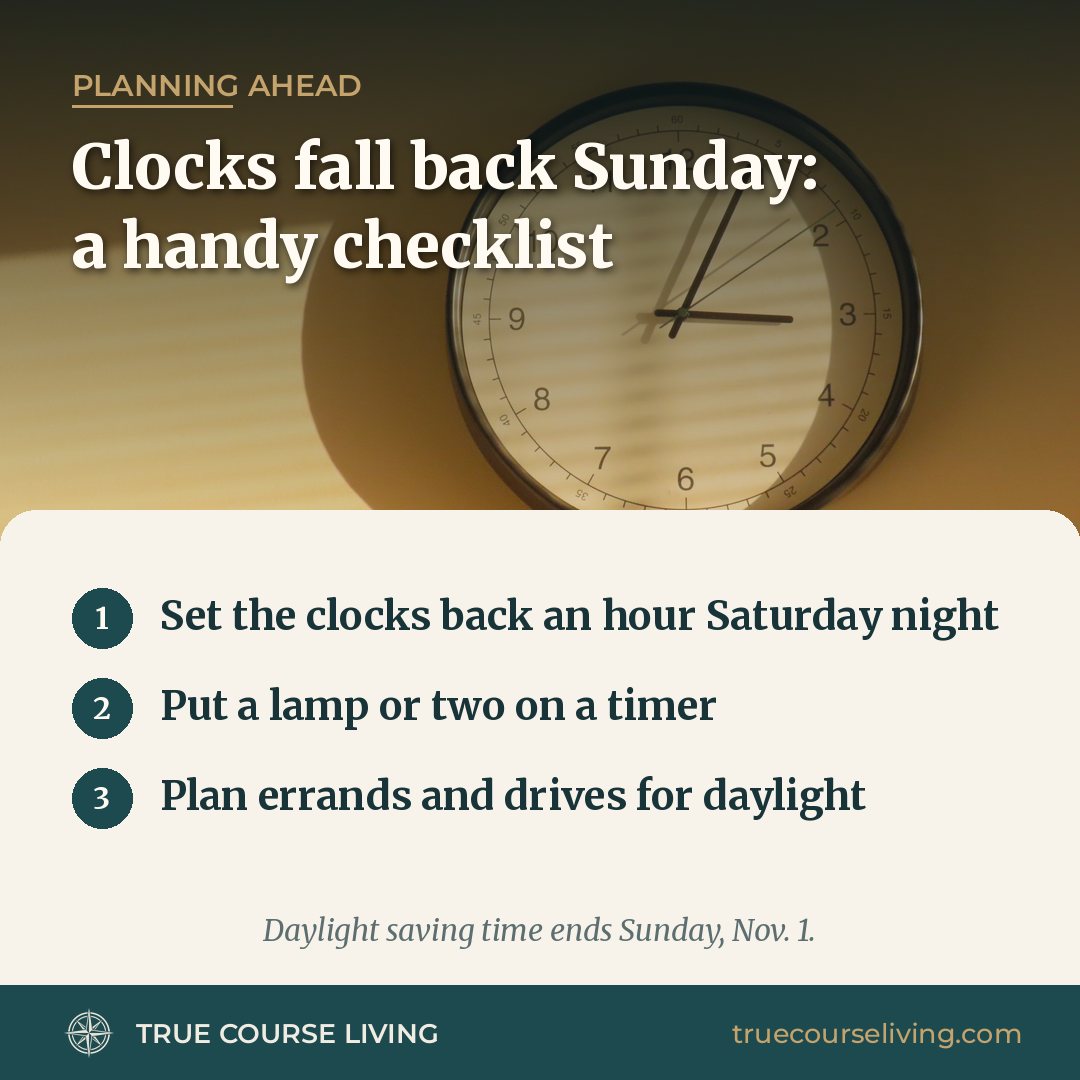
Daylight saving time ends this Sunday, November 1, at 2 a.m., when the clocks fall back one hour. We get an extra hour of sleep, which is lovely. Then it’s dark by suppertime until spring, which is less lovely. A little planning makes the switch, and the long evenings, easier.
1. Change the clocks Saturday night
Phones, computers and most cable boxes change themselves. Plenty of others don’t:
- The microwave, the oven and the coffee maker
- The car clock (check the owner’s manual if it’s a puzzle)
- Wall clocks, bedside clocks and watches
- Thermostats and timers on lamps or sprinklers
Change them all before bed on Saturday, so you’re not an hour early to church on Sunday. If you live in Hawaii or most of Arizona, you can skip all this; they don’t change their clocks.
2. Brighten the early evenings
When it’s dark at 5 p.m., good lighting makes the house cozier and easier to get around.
- Put a lamp or two on an inexpensive plug-in timer, so you never walk into a dark house.
- Turn the porch light on before dark, or use a dusk-to-dawn bulb.
- Add night-lights in the hallway, bathroom and near the stairs.
- Keep a flashlight by the bed and by the door.
3. Plan errands and drives for daylight
- Move the grocery run, appointments and visits a little earlier in the day when you can.
- Clean the headlights and the inside of the windshield. A clean windshield cuts glare.
- Check that your headlights and taillights all work.
- If night driving has gotten harder, it’s fine to hand the evening driving to a friend, a family member or a ride service. Lots of us do.
Try this today
- Make a list of every clock that needs changing by hand.
- Buy one or two lamp timers this week.
- Plan your next appointment for late morning or early afternoon.
Keep your routine steady
The extra hour can leave you waking up early or feeling a bit off for a few days. Try to keep your usual times for meals and bed, and go easy on the late-afternoon nap. If your medicine schedule is tied to the clock, ask your pharmacist whether the one-hour change matters for you.
Check on a neighbor
Longer evenings can feel lonely, especially for someone who lives alone. A quick phone call at dusk, or an invitation to supper or a card game, brightens the evening for both of you.
Make the most of the daylight
Get outside in the morning, even for ten minutes with your coffee on the porch or a short walk. Morning light is cheerful, and it helps the day feel longer.
While you’re at it
The time change is a handy reminder to press the test button on your smoke and carbon monoxide alarms. Our free True Course Starter Kit includes a large-print Home Safety Walk-Through you can take room by room. You can get it free on the homepage.
How many clocks in your house still need changing by hand? Tell me in the comments.