
Three Habits That Stop Scammers Cold
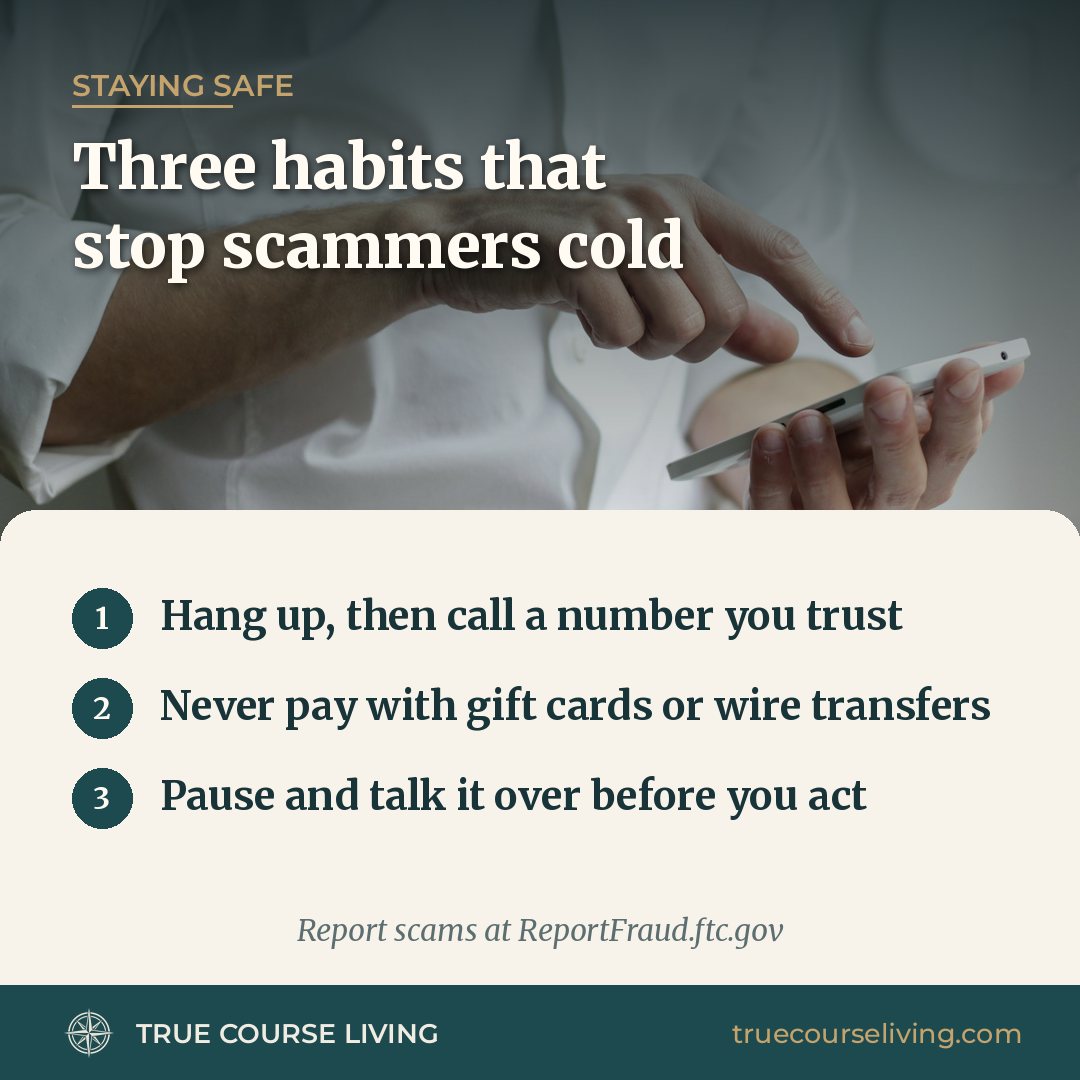
Scammers rely on surprise and hurry. These three habits take away their advantage.
Prefer to watch? Here is the video version (large print, no sound needed). Watch on YouTube
The phone rings. "This is your bank. There’s a problem with your account, and we need to act right now." Or it’s a text about a missed package, a grandchild in trouble, or a prize you never entered to win.
Scams have gotten slick, and they target everyone, but people over 60 get more than their share. The good news is that nearly every scam relies on the same two tricks: surprise and hurry. A few habits take those tricks away.
1. Hang up, then call a number you trust
If a call, text or email claims to be from your bank, Medicare, Social Security, the IRS or a company you do business with, don’t use the number or link they give you. Hang up, and call back using:
- The number on the back of your card or on your statement
- The number on the agency’s official website
- A number you’ve used before and know is real
A real bank or agency won’t mind you calling back. A scammer will.
2. Watch how they want to be paid
This is the clearest warning sign of all. Anyone who tells you to pay with gift cards, a wire transfer, cryptocurrency or cash sent by courier is a scammer. Real government agencies and businesses don’t ask for that.
The same goes for anyone who asks for your Medicare number, Social Security number or bank password out of the blue.
3. Pause and talk it over
Scammers want you to act before you think. They’ll say it’s urgent, that it’s a secret, or that you’ll be in trouble if you hang up. That pressure is the giveaway.
A real problem will still be there after you take a breath and call a friend, a family member or your bank directly.
Try this today
- Write your bank’s real phone number on a card and keep it by your phone.
- Agree with a family member on a "family password" for emergency calls.
- Practice saying: "I’ll call you back," and then hanging up.
If it already happened
Don’t be embarrassed. Smart, careful people get fooled every day. Call your bank right away, change any passwords you shared, and report it at ReportFraud.ftc.gov. If you’re a veteran, the VA’s VSAFE program can help too.
If someone pressures you, hangs up angry, or tells you not to tell anyone, that’s a scam. Trust that feeling.
More trusted, free help is on the Resources page. Have you had a strange call or text lately? What tipped you off? (Please don’t share personal details in comments.)