
Winter Car Emergency Kit: A Simple Checklist
A simple winter car emergency kit checklist for drivers over 60: what to keep in the trunk, a quick car check, and what to do if you get stuck.
Prefer to watch? Here is the video version (large print, no sound needed). Watch on YouTube
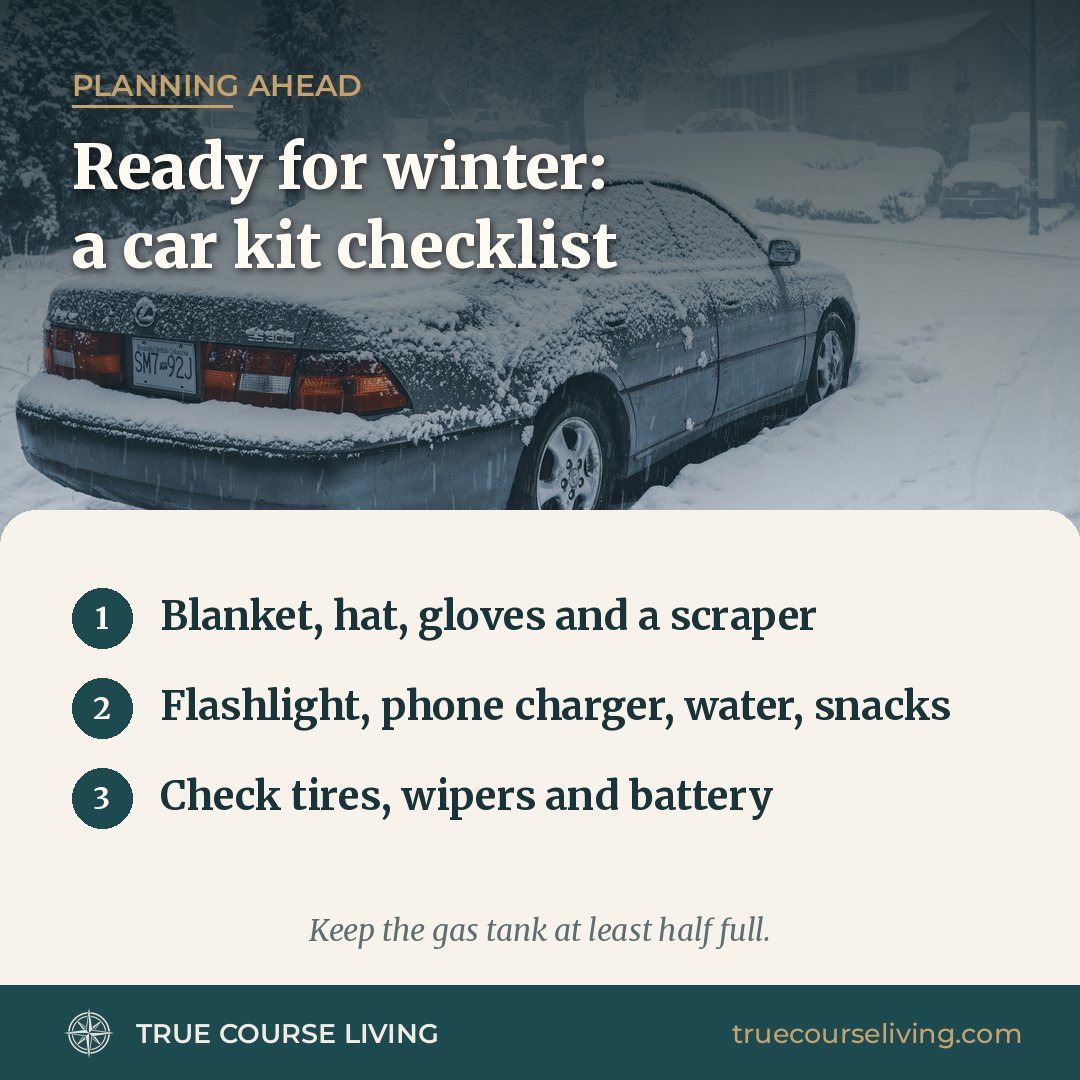
Winter has a habit of showing up before we’re ready for it. One morning the windshield is frosted over and the scraper is buried in the garage somewhere behind the lawn mower. Ten minutes this week can make a cold surprise on the road a lot less stressful.
1. Pack a winter kit for the trunk
A plastic bin or an old duffel bag keeps it all together.
- A warm blanket, plus a hat, gloves and an extra pair of socks
- An ice scraper and snow brush
- A small folding shovel
- A bag of sand or non-clumping cat litter for traction if you get stuck
- Jumper cables, and a reflective triangle or flares
- A few hand warmers
2. Add the comfort basics
- A flashlight with fresh batteries (or a wind-up one)
- A phone charger that works in the car
- Bottled water and a few snacks that won’t freeze solid, like granola bars or crackers
- A small first-aid kit, and a few days of any important medicines if you travel
- A card with phone numbers for family and your roadside assistance plan
3. Give the car a once-over
- Tires: air pressure drops in cold weather, so check it once a month. Look at the tread, too.
- Wipers and fluid: swap blades that streak, and fill up with winter washer fluid that won’t freeze.
- Battery: cold is hard on batteries. Many auto parts stores and mechanics will test yours for free.
- Lights: make sure headlights, taillights and turn signals all work, and give the headlights a good cleaning.
And keep the gas tank at least half full all winter. It’s an old rule, and still a good one.
Try this today
- Gather your kit items in one bin this week.
- Check your tire pressure on the next cool morning.
- Put your roadside assistance number in your phone and on a card.
If you do get stuck
- Stay with your car. It’s easier for help to find you, and it’s shelter.
- Call for help and tell them where you are. Turn on your flashers.
- Run the engine about 10 minutes an hour for heat, and make sure the tailpipe is clear of snow first. Crack a window a little.
- Bundle up with the blanket and hat, and move your arms and legs now and then to stay warm.
Plan around the weather
The best winter drive is often the one you skip. When the forecast calls for ice or snow, move the errand to another day or let a friend or family member drive. There’s no prize for being out on the worst road of the year.
Our free True Course Starter Kit includes a large-print Who to Call page that’s perfect for the glove box. You can get it free on the homepage. For the house, see Get Your Home Ready for Winter.
What’s the one thing you always keep in your car? Tell me in the comments.